
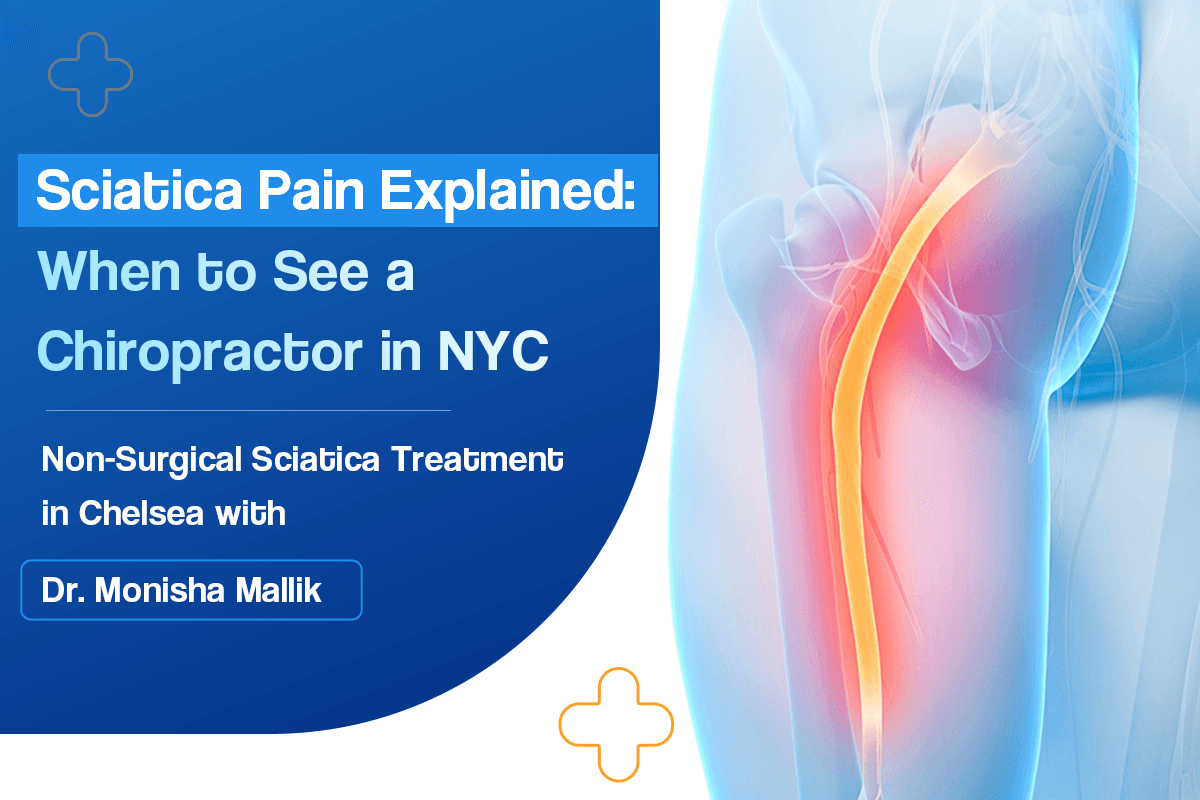
Sciatica Pain Explained: When to See a Chiropractor in NYC
Non-Surgical Sciatica Treatment in Chelsea with Dr. Mallik
Sciatica pain can be one of the most unsettling types of discomfort people experience. It often starts as a deep ache in the lower back or hip, then gradually travels down the back of the leg, sometimes reaching the calf or even the foot. This pain can also come on suddenly. Many patients describe it as burning, tingling, or electric nerve pain that makes sitting, walking, exercise and transitional movements uncomfortable.
In my Chelsea chiropractic practice, patients often arrive worried that sciatica means something severe or irreversible. The good news is that in many cases, sciatica nerve pain responds very well to thoughtful, non-surgical treatment, particularly when the underlying cause is identified early.
What Is Sciatica Pain?
Sciatica refers to irritation or compression of the sciatic nerve, the largest nerve in the body. This nerve originates in the lower spine, travels through the pelvis and hips, and continues down the back of each leg.
When this nerve becomes irritated, it produces a distinctive pattern of symptoms. Instead of staying localized in the lower back, the pain radiates along the nerve pathway. This is why people often notice sciatica pain down the leg, sometimes accompanied by numbness, tingling, or weakness.
Because the sciatic nerve connects multiple structures, the source of irritation may not always be obvious. The discomfort felt in the leg may actually originate from changes in the spine, pelvis, or surrounding muscles.
Why Sciatica Is So Common in NYC
Living in a fast-paced city like New York places unique demands on the body. Many professionals spend hours sitting at a desk, followed by long commutes and limited time for restorative movement. In other cases, it can be a result of poor form with exercise and strength training. This can create stiffness in the lower spine and hips, which may gradually increase pressure around the sciatic nerve.
Extended sitting is one of the most common contributors to sciatica pain. When we sit for prolonged periods, the hip flexors tighten, the pelvis tilts forward, and the lower back absorbs additional stress. Over time, these changes can reduce the space around the nerves exiting the spine.
Stress also plays an important role. When the nervous system remains in a heightened state for long periods, muscles around the spine and hips become tense and protective. This tension can increase pressure on the sciatic nerve and prolong symptoms.
These patterns explain why so many people in Manhattan eventually search for sciatica treatment in NYC after weeks or months of unresolved discomfort.
Common Causes of Sciatica Nerve Pain
Sciatica can develop for several different reasons, and identifying the correct cause is essential for effective treatment.
In many cases, the irritation begins with a disc-related issue in the lower spine, where a bulging or herniated disc presses on the nerve root. In other cases, the problem originates in the pelvis or hips, particularly when tight muscles compress the nerve as it travels through the body.
Another common contributor is pelvic imbalance or poor movement mechanics, which can place uneven pressure on the spine and surrounding tissues. Previous injuries, repetitive strain from sports or exercise, and chronic postural habits may also play a role.
Because the sciatic nerve interacts with so many structures, effective care requires evaluating the entire movement system rather than focusing on a single joint or muscle.
Symptoms That Suggest Sciatica
Sciatica symptoms often follow a recognizable pattern. Patients typically notice pain beginning in the lower back, hip, or glute region that gradually travels down the leg. The discomfort may intensify when sitting, bending forward, or getting up from a seated position.
Some people experience sharp nerve pain, while others describe a persistent dull ache accompanied by tingling or numbness. In certain cases, weakness in the leg or foot may develop if the nerve remains irritated for an extended period.
These sensations can be alarming, but they often improve significantly once pressure on the nerve is reduced.
When to See a Chiropractor for Sciatica
One of the most common questions patients ask is when to seek professional care. While mild nerve irritation may occasionally settle with rest, persistent symptoms usually indicate that the underlying issue needs attention.
If sciatica pain continues for more than a week or two, worsens with sitting or walking, or travels down the leg, it may be time to consult a chiropractor for sciatica in NYC.
Early evaluation is particularly helpful because it allows us to address movement imbalances before the nervous system becomes increasingly sensitive. Many patients who seek care sooner find that recovery happens more quickly and with less disruption to their daily routine.
How Chiropractic Helps Sciatica
Modern chiropractic care offers a comprehensive, non-surgical approach to sciatica treatment. Rather than focusing only on the site of pain, chiropractic care examines how the spine, pelvis, and surrounding muscles interact with the nervous system.
In my Chelsea practice, I begin with a detailed movement assessment to understand how the body distributes load. This evaluation helps identify the mechanical patterns that may be compressing or irritating the sciatic nerve.
Treatment often includes a combination of gentle spinal adjustments, soft-tissue therapy, and movement-based rehabilitation. Techniques such as Neurokinetic Therapy help identify muscle imbalances that contribute to nerve irritation, while Active Release Technique can reduce tension in the muscles surrounding the sciatic nerve.
Dynamic Neuromuscular Stabilization is also frequently used to retrain breathing mechanics and core stability. These changes help restore balance in the spine and pelvis, allowing the nerve to move more freely.
When these elements are combined thoughtfully, chiropractic care can provide effective sciatica pain relief without surgery or long-term medication.
Non-Surgical Sciatica Treatment in NYC
Many patients seeking relief from sciatica are understandably concerned about invasive treatments. Fortunately, a large percentage of sciatica cases respond well to conservative care.
Non-surgical sciatica treatment focuses on reducing nerve irritation while improving the body’s ability to support healthy movement. By addressing spinal mobility, pelvic alignment, and muscle coordination together, the body can gradually return to a more stable and comfortable state.
For many people, this integrated approach allows them to return to walking, working, and exercising with far less discomfort.
A Patient Experience: When Sciatica Finally Improves
It is not uncommon for patients to arrive feeling frustrated after weeks of persistent nerve pain. Sitting may be difficult, walking uncomfortable, and sleep may be disrupted by aching or tingling in the leg.
Once we identify the movement patterns contributing to nerve irritation, the path toward improvement becomes clearer. As pressure on the nerve decreases and the body begins moving more efficiently, many patients notice significant changes in how their back, hips, and legs feel with tools and education on safely getting back to what they love.
Sciatica often improves most when the body is supported as a system rather than treated as a single painful area.
Sciatica Treatment in Chelsea NYC with Dr. Mallik
If you are experiencing sciatica pain, nerve discomfort traveling down the leg, or persistent lower back and hip tension, you do not have to navigate it alone. Thoughtful, personalized care can help address the root cause and support lasting recovery.
As a chiropractor in NYC specializing in movement health and nervous system regulation, I provide non-surgical sciatica treatment designed to help patients regain comfort, stability, and confidence in their movement.
Start Your Journey
Book a 60-minute consultation in Chelsea, NYC for a comprehensive assessment of your posture, spinal mobility, pelvic alignment, breathing patterns, and muscle coordination.
Not sure if chiropractic care is the right approach?
Schedule a Free Discovery Call to learn more about what sciatica treatment involves and how we can help.
Call: 917-300-9702
Email: hello@drmonishamallik.com
Further Reading: Personalized Movement Health Plans
Yours in Health,
Dr. Mallik, D.C.